Classroom Library
How to Track Book Checkouts Without Going Crazy
Every classroom library eventually hits the same wall. You set up a system — a sign-out sheet, a clipboard, an honor jar of sticky notes — and for the first few weeks it actually works. Then June comes around, half your favourite titles have vanished, and you genuinely cannot remember who had The Star Catchers last.
You're not doing it wrong. Checkout tracking is one of those jobs that looks simple until forty kids and a school year happen to it. Here's what actually helps, starting with the free stuff.
Start with a system, any system
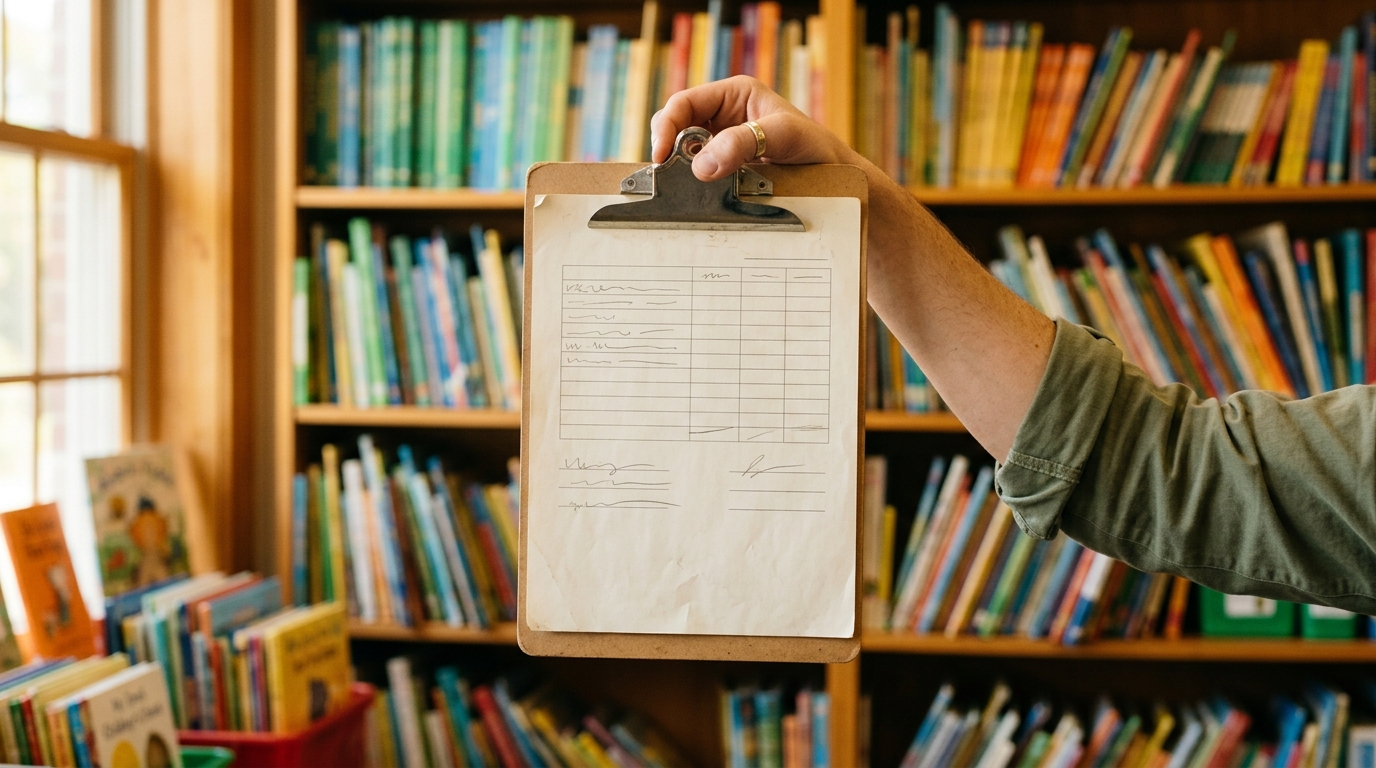
The biggest jump in reliability isn't digital vs. physical — it's having something at all vs. the honor system. A clipboard with a simple table (name, book title, date out) beats "just remember to bring it back" every time, because it puts a small moment of friction between a kid and walking off with a book indefinitely.
Low-tech options that genuinely work
If you're not ready to change anything about how your classroom runs, a few low-cost tweaks go a long way:
- Colour-coded pockets. A library pocket glued inside the front cover, with a card the student signs and drops in a labelled envelope by name. Old-school, but it works because it's visual — an empty pocket is obviously a book that's out.
- A weekly reset. Instead of trying to track every single day, do a five-minute Friday check: who has what, does it match the sheet, anything overdue. Weekly beats "whenever I remember" by a wide margin.
- One shelf, one rule. Limiting kids to one book checked out at a time massively cuts down on the "wait, do they have two or three out?" confusion that eats the most time.
Where paper starts to break down
Paper systems tend to fail in the same predictable spots: illegible handwriting, a sheet that gets lost, or simply not having time to cross-reference forty names against a shelf before the bell rings. None of that means you're bad at this — it means you've outgrown what a clipboard can reasonably do.
The scan-based option
This is the point where a lot of teachers start looking at digital tools — and it's worth knowing what that actually solves before switching anything. A barcode scan replaces the "who has what" guesswork with an actual record: point a phone at a book's barcode, and it's logged as checked out, with no handwriting to decode and no sheet to lose.
That's the whole idea behind Dewi — I built it because I was the teacher squinting at my own handwriting trying to remember who had which book. It's free to start if you want to see whether scanning actually saves you time versus your current system.
The real answer
Whatever system you pick, the one that works is the one you'll actually keep using in March, not just in September. A clipboard you check every Friday will always beat a fancy system you abandon by October. Start simple, and only add complexity once you've actually felt the specific problem it solves.